


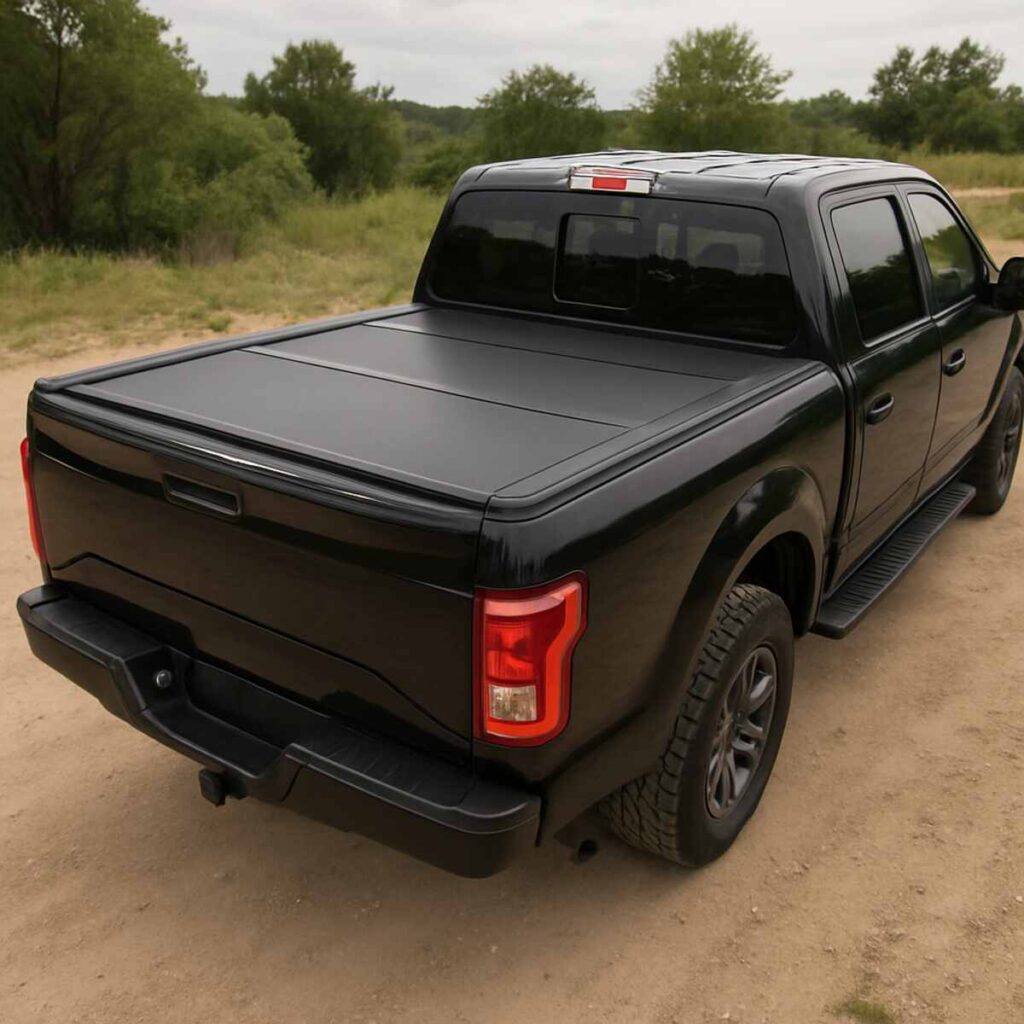
Whether you use your pickup truck for hauling construction materials, embarking on weekend camping trips, or simply commuting to the office, the bed of your truck is its most valuable asset. However, leaving that expansive cargo space exposed to the elements and prying eyes is a risk most truck owners are no longer willing to take. Enter the tonneau cover—a crucial upgrade that transforms an open bed into a secure, weather-resistant vault. The best guide to finding quad fold tonneau cover.
While there are many styles available—ranging from soft roll-ups to single-piece painted fiberglass lids—hard folding truck bed covers have emerged as the industry standard for their perfect blend of security, durability, and convenience. But within this category, a fierce debate rages on among truck enthusiasts: should you opt for a traditional three-panel design, or upgrade to a four-panel flip-back model?
This comprehensive guide will break down everything you need to know. We will conduct an in-depth Tri-Fold vs Flipback Quad-Fold Tonneau Cover (Comparison & Buyer’s Guide) to help you make an informed decision that perfectly aligns with your lifestyle, budget, and hauling needs.
1. Understanding Hard Folding Truck Bed Covers
Before we pit these two heavyweights against each other, it is important to understand why folding covers dominate the market.
In any comprehensive tonneau cover comparison, hard folding models stand out because they offer a rigid, impenetrable barrier while still allowing you to access your truck bed quickly. Unlike solid, one-piece hinged covers that restrict you from hauling tall items like refrigerators or dirt bikes, folding covers can be collapsed toward the bulkhead (the front of the bed near the cab).
Hard folding covers are typically constructed from heavy-duty materials, offering superior protection against theft and extreme weather. They operate on a track system or via bed rail clamps, folding in sections on integrated hinges. The primary difference between the models on the market today comes down to the number of panels they feature and how those panels interact with your truck’s cab when fully opened.
The Evolution of the Folding Cover
Historically, folding covers were soft vinyl stretched over aluminum frames. While cost-effective, they fluttered in the wind and could be easily slashed with a pocket knife. The introduction of rigid panels revolutionized the industry, leading us to today’s primary contenders: the classic tri-fold and the advanced flip-back quad-fold.
2. Deep Dive: The Classic Hard Tri-Fold Tonneau Cover
The hard tri-fold tonneau cover is the bread and butter of the truck accessory world. As the name implies, it consists of three rigid panels connected by robust hinges.
How It Works
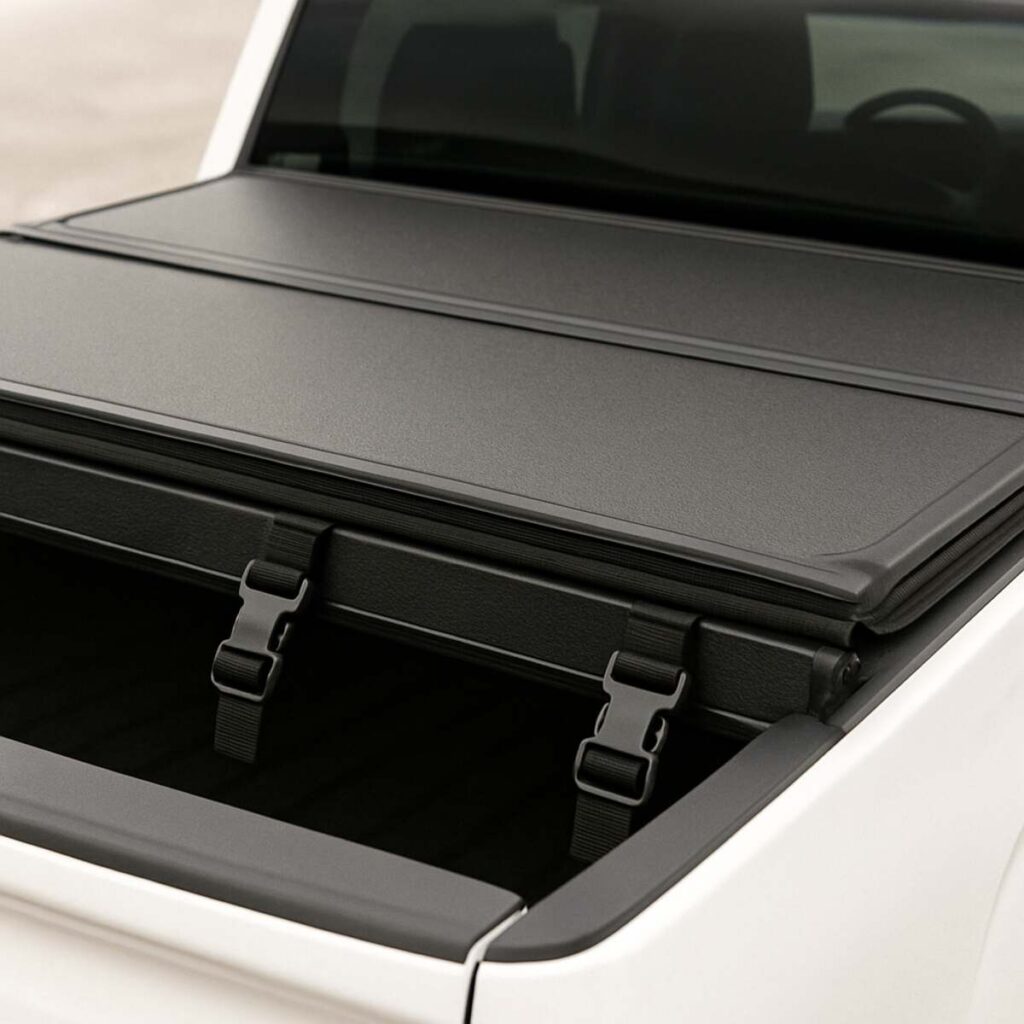
When closed, the cover sits flat over your truck bed. To open it, you unlatch the panel nearest the tailgate and fold it back over the middle panel. You then fold those two panels together over the third panel (the one closest to the cab). You secure the folded panels with built-in buckling straps, allowing you to drive safely with the cover open.
Pros and Cons of Hard Tri-Fold Covers
Understanding the pros and cons of hard tri-fold covers is essential for any prospective buyer.
The Pros:
- Simplicity and Reliability: With fewer moving parts and hinges than their four-panel counterparts, tri-folds are remarkably durable and easy to operate.
- Easy Removal: Most tri-folds can be completely removed from the truck bed in under five minutes using quick-release hand-tightened clamps.
- Cost-Effective: Because the engineering is relatively straightforward, tri-folds are generally more affordable than advanced flip-back models.
- Rear Window Visibility: When folded up and strapped down, a tri-fold cover sits flat and does not block your rear window.
The Cons:
- Limited Bed Access: This is the most significant drawback. A traditional tri-fold cover only exposes two-thirds of your truck bed. The final panel remains fixed over the bulkhead. If you need to load a large piece of furniture or an ATV, you must completely remove the cover from the truck.
- Bulkiness: When folded, the three panels create a thicker stack that sits above the bed rails, which some users find aesthetically unappealing.
3. Deep Dive: The Flipback Quad-Fold Tonneau Cover
The quad-fold (often referred to as a flip-back or fold-a-back cover) was engineered to solve the primary limitation of the tri-fold: bed access. This design features four smaller panels rather than three large ones.
How It Works
The opening process starts exactly like a tri-fold. However, once you have folded the cover all the way to the cab, the quad-fold has a trick up its sleeve. The entire stacked assembly is mounted on a specialized hinge system that allows it to flip up 90 degrees, resting vertically against the back of your truck cab. Built-in prop rods or gas struts secure the cover in this upright position, allowing you to drive safely at highway speeds.
The Appeal of the Quad-Fold
The Pros:
- 100% Bed Access: Because the cover flips entirely out of the way, it functions as a full bed access tonneau cover. You can use every inch of your truck bed without having to remove heavy hardware.
- Cab Protection: When propped up vertically, the cover acts as a headache rack, protecting your rear window from shifting cargo.
- Sleek Aesthetics: Many quad-folds are designed to sit flush with the bed rails, offering a premium, low profile folding truck cover look.
The Cons:
- Obstructed Rear View: When deployed in the vertical position, the cover completely blocks your rearview mirror. You must rely entirely on your side mirrors and backup camera.
- Complex Installation: They often require the installation of dedicated mounting rails with drain tubes.
- Higher Price Tag: The advanced hinges, prop rods, and extra panels add to the manufacturing cost.
4. Head-to-Head Comparison: Three Panel vs Four Panel Folding Covers
When evaluating three panel vs four panel folding covers, you need to look at how you use your truck daily. Let’s break down the comparison into actionable categories.
Daily Usability and Cargo Loading
If you use your truck primarily for groceries, luggage, golf clubs, and the occasional trip to the hardware store for lumber, a standard tri-fold is usually sufficient. The 2/3 bed access easily accommodates everyday items.
However, if you frequently haul large appliances, motorcycles, ATVs, or pallets of heavy materials that require a forklift to drop in, a quad-fold is infinitely superior. The ability to flip the cover up and out of the way without breaking out the tools to remove the cover entirely is a massive time-saver for contractors and heavy-duty users.
Vertical Storage Truck Bed Covers
One of the defining features of a quad-fold is its ability to serve as a vertical storage solution. Vertical storage truck bed covers utilize prop rods that lock the heavy panels firmly against the cab. Rubber bumpers are attached to the cover to ensure it doesn’t scratch your truck’s paint or break the glass. If you frequently find yourself picking up unexpected large cargo, having a cover that seamlessly transitions into vertical storage is invaluable.
Aesthetics and Profile
Most traditional tri-folds sit on top of the truck bed rails. This creates a raised profile that adds about an inch or two of height to the bed. While this offers excellent water shedding, some truck owners prefer a sleeker look.
Many quad-folds (like the BAKFlip series) are designed as flush-mount systems. They mount inside the bed rails, creating an ultra-clean, flush, low profile folding truck cover. This seamless look integrates perfectly with the modern styling of today’s luxury pickup trucks.
Are Quad-Fold Covers Worth the Extra Cost?
This is the ultimate question in any tonneau cover reviews. A high-quality hard tri-fold will typically cost between $700 and $1,100. A premium quad-fold flip-back cover usually ranges from $1,000 to $1,500+.
Are quad-fold covers worth the extra cost? Yes, if your lifestyle demands versatility. If you find yourself needing your entire truck bed multiple times a month, the convenience of not having to unclamp and store a bulky 60-pound tri-fold in your garage is well worth the premium. If you rarely haul items larger than what fits in a 2/3 open bed, save your money and invest in a high-quality tri-fold.
5. Security: Which Tonneau Cover is Most Secure?
Truck beds are frequent targets for thieves. A soft roll-up cover only keeps honest people honest. When you upgrade to a hard folding cover, you are turning your bed into a secure vault. But which tonneau cover is most secure?
The security of a folding cover relies on two primary factors: the panel material and the locking mechanisms. In the battle between tri-folds and quad-folds, both offer exceptional security, provided they are made of the right materials and feature robust latches.
Panel Construction: Aluminum vs Fiberglass Tonneau Panels
When browsing the best tonneau covers, you will repeatedly see two materials dominating the spec sheets: aircraft-grade aluminum and fiberglass-reinforced polymer (FRP).
- Aluminum Panels: Aluminum is incredibly strong, lightweight, and highly resistant to rust. Most premium folding covers use heavy-duty aluminum panels with a rigid foam core. This provides immense structural integrity. The primary downside to aluminum is that it can dent if struck by a heavy, sharp object (like hail or a dropped hammer). Furthermore, matte black aluminum can become incredibly hot to the touch in direct summer sunlight.
- Fiberglass Tonneau Panels (FRP): FRP panels are made by reinforcing plastic polymer with fiberglass. The major advantage of FRP in an aluminum vs fiberglass tonneau panels debate is impact resistance. FRP is highly resistant to dents and scratches; it tends to bounce back from impacts that would dent aluminum. It also stays much cooler to the touch in the sun. However, it can be slightly heavier and, depending on the manufacturing quality, may fade over time if not treated with UV protectants.
Both materials offer incredible security. A thief cannot cut through either material without heavy power tools, which would draw immediate attention.
Understanding the Locking Mechanism for Folding Covers
A hard cover is only as secure as its latches. The standard locking mechanism for folding covers integrates directly with your truck’s tailgate.
Most modern folding covers feature rotary latches or slam latches that lock firmly into the bed rails as soon as you close the panel. The cover cannot be unlatched from the outside; the release cables are hidden underneath the panels. Therefore, the cover can only be opened if the tailgate is lowered.
When you close the folding cover and lock your truck’s tailgate (most modern trucks have electronic tailgate locks tied to the key fob), the bed becomes completely secure. Even the most aggressive pry bars will struggle to bypass a heavy-duty aluminum cover secured by heavy-duty slam latches. In this regard, both tri-folds and quad-folds are equally secure, provided you remember to lock your tailgate!
6. Defying the Elements: Weather Resistance
No tonneau cover is 100% waterproof. Trucks are manufactured with gaps in the bed, especially around the tailgate, to allow for water drainage. However, a premium hard folding cover will keep your cargo dry in 99% of weather conditions.
Tonneau Cover Weather Sealing
Effective tonneau cover weather sealing is what separates cheap knock-offs from premium brands.
When installing a cover, you will notice thick EPDM rubber seals lining the perimeter. EPDM (ethylene propylene diene monomer) rubber is an industrial-grade material that withstands extreme UV exposure and freezing temperatures without cracking or shrinking.
- Tri-Folds: Because traditional tri-folds sit on top of the bed rails, they utilize an overlapping seal design. Water naturally sheds off the sides of the cover, much like rain rolling off a roof. They are notoriously good at keeping water out without needing complex drainage systems.
- Quad-Folds: Flush-mounted quad-folds sit inside the rails. While they have rubber seals, water can sometimes pool in the rail tracks. To combat this, manufacturers include drain tubes. These plastic tubes attach to the end of the mounting rails and are routed out through existing drainage holes in the truck’s bulkhead. This acts like a gutter system, channeling water out of the bed before it can drip onto your cargo.
Maximum Load Capacity for Truck Bed Covers
Weather resistance isn’t just about rain; it’s also about snow. If you live in a region that gets heavy snowfall, the weight of accumulated snow can crush a cheap cover.
When checking the specs, pay close attention to the maximum load capacity for truck bed covers. Premium aluminum or fiberglass covers boast an evenly distributed weight capacity of 300 to 400 pounds. This means they can easily withstand a heavy blizzard. Some extreme-duty models can hold upwards of 500 pounds, allowing you to strap extra gear directly on top of the cover.
Note: Always remember that this capacity is for evenly distributed weight. You cannot stand in the center of a single panel without risking a dent or structural failure.
7. Performance and Towing Considerations
Adding a tonneau cover does more than just protect your gear; it changes the aerodynamic profile of your truck and impacts how you tow.
The Impact of Tonneau Covers on Gas Mileage
One of the most persistent debates in the truck community revolves around the impact of tonneau covers on gas mileage. Does covering the bed actually save you money at the pump?
To understand this, we have to look at aerodynamics. When driving an open-bed pickup at highway speeds, wind travels over the cab and dips down into the truck bed, slamming into the closed tailgate. This creates “aerodynamic drag,” which forces the engine to work harder to maintain speed.
Installing a tonneau cover creates a smooth surface for the wind to glide over, eliminating the tailgate drag. Studies and wind tunnel tests have shown that a high-quality, flush-fitting tonneau cover can reduce aerodynamic drag by up to 10%.
In real-world driving conditions, this typically translates to an improvement of about 1 to 1.5 miles per gallon (MPG) on the highway. While this might not sound like a lot, if you drive 15,000 miles a year, the fuel savings will literally pay for the cover over its lifespan. Flush-mounted quad-folds, due to their lower profile, tend to offer a very marginal aerodynamic advantage over top-mount tri-folds, but both will significantly improve your highway efficiency.
Best Truck Bed Cover for Fifth Wheel Towing
If you use your truck to tow a fifth wheel or a gooseneck trailer, bed access is your primary concern. The hitch takes up a significant portion of the bed, and the neck of the trailer requires ample clearance as you navigate turns.
When looking for the best truck bed cover for fifth wheel towing, a quad-fold is almost always the winner. Because a tri-fold leaves the front third of your bed covered, it can severely limit the turning clearance for the nose of your trailer, risking a catastrophic collision between the trailer and the cover.
A quad-fold cover, which can be flipped up vertically and secured against the cab, completely clears the bed space. This gives the kingpin and the nose of the fifth-wheel trailer maximum articulation and turning radius. Just ensure that when the cover is in the vertical position, you still have adequate clearance between the folded panels and the nose of your trailer during sharp backing maneuvers.
8. DIY Guide: How to Install a Folding Bed Cover
One of the best things about hard folding covers is that they do not require a trip to the mechanic. With basic hand tools and an hour of free time, you can do it yourself. Here is a general guide on how to install a folding bed cover.
Disclaimer: Always follow the specific instructions provided by the manufacturer, as mounting hardware varies.
Step 1: Prep and Clean the Bed
Start by thoroughly cleaning your truck’s bed rails and bulkhead. Dirt and debris will prevent the weather seals from sitting flush, leading to leaks. If your truck has a drop-in plastic bed liner, you may need to trim small sections of the plastic where the clamps will attach.
Step 2: Apply the Bulkhead Seal (If required)
Most trucks have a bulkhead that sits slightly lower than the side rails. To bridge this gap, manufacturers provide a strip of thick weather seal tape. Peel the backing off and apply it evenly across the top of the front bulkhead, pressing down firmly.
Step 3: Install the Mounting Rails (For Quad-Folds)
If you are installing a top-mount tri-fold, you can usually skip to Step 5. Flush-mount quad-folds require side rails.
- Place the driver-side rail against the inside lip of the truck bed.
- Use the provided clamps to secure the rail. Typically, you will use three clamps per side (front, middle, and rear).
- Push down on the rail while tightening the clamps with a socket wrench to ensure the rail sits level and tight against the truck bed. Do not overtighten and strip the bolts.
- Repeat for the passenger side.
Step 4: Route the Drain Tubes (For Quad-Folds)
Attach the clear plastic drain tubes to the spouts at the cab end of the mounting rails. Route the other end of the tube through the factory rubber grommets or drain holes in the front of the truck bed.
Step 5: Position the Cover
With the help of a friend, carefully lift the folded tonneau cover assembly and place it behind the cab.
- For a tri-fold, align it evenly on top of the bed rails.
- For a quad-fold, seat the cover into the tracks of your newly installed mounting rails.
Step 6: Secure the Front Clamps
Crawl under the cover and attach the front clamps (the ones nearest the cab). Hand-tighten them first. Make sure the cover is perfectly square with the truck bed.
Step 7: Unfold and Test
Unfold the cover one panel at a time, moving toward the tailgate. Check that the latches snap securely into the side rails or under the bed lip. Finally, close the tailgate to ensure the rear weather seal overlaps perfectly. If the cover is crooked, fold it back up, loosen the front clamps, adjust, and retighten.
9. Buyer’s Guide: Choosing the Right Cover for You
Now that we have explored the engineering, security, and installation, how do you synthesize all this information? When sifting through countless tonneau cover reviews, keep this buyer’s matrix in mind.
Choose a Hard Tri-Fold If:
- You are on a stricter budget: You want maximum security without crossing the $1,000 threshold.
- You rarely haul oversized items: 2/3 bed access is more than enough for your camping gear, tools, and daily errands.
- You want easy removal: You prefer a cover that you can take completely off the truck by yourself in a few minutes.
- You dislike rail systems: You want a cover that clamps directly to your existing bed rails without installing extra tracks or drain tubes.
Choose a Flipback Quad-Fold If:
- You need full bed access: You regularly haul dirt bikes, refrigerators, or construction materials that require the whole bed.
- You tow a 5th Wheel: You need the bed clearance for your gooseneck or fifth-wheel hitch.
- You prefer a low profile: You want a sleek, flush-mounted look that integrates seamlessly with your truck’s design.
- You like cab protection: You appreciate having a built-in headache rack when the cover is deployed vertically.
Top Brands to Consider
While we won’t declare a single winner, some of the best tonneau covers on the market come from reputable brands that have spent decades perfecting their craft:
- BAK Industries: Famous for their BAKFlip series (like the MX4 and F1), they are the kings of the low-profile quad-fold market.
- Extang: Known for the Solid Fold series, offering incredibly durable top-mount tri-folds that require zero tools to install.
- UnderCover: Their ArmorFlex and Flex lines offer fantastic quad-fold options featuring LINE-X coated panels for extreme durability.
- Lomax: Offers premium, ultra-low-profile aluminum tri-folds that are incredibly lightweight and easy to remove entirely.
10. Maintenance and Care for Longevity
Investing in a hard folding truck bed cover is significant, and protecting that investment requires a bit of routine maintenance. Fortunately, folding covers are remarkably low maintenance compared to painted fiberglass lids or motorized retractable covers.
Cleaning the Panels
Whether you chose aluminum vs fiberglass tonneau panels, routine cleaning is essential. Wash your cover with the same automotive soap you use for your truck. Avoid harsh chemical solvents or abrasive scrubbers, which can degrade the UV-resistant topcoat.
UV Protection
Constant exposure to the sun will eventually take a toll on any exterior accessory. To prevent the matte black finish from fading or chalking, apply a water-based UV protectant spray (like 303 Aerospace Protectant) every few months. Do not use silicone-based tire shines on your cover, as they create a greasy film that attracts dust and can cause the rubber seals to degrade.
Lubricating the Seals and Hinges
The hinges on folding covers are exposed to rain, snow, and road salt. Twice a year, apply a dry Teflon spray or a specialized silicone lubricant to the hinges to ensure they fold smoothly. Additionally, wipe down the EPDM rubber seals with a rubber conditioner to keep them plump and prevent them from drying out and cracking during the winter months.
Hardware Checks
The vibrations from driving down the highway or off-road trails can cause mounting hardware to loosen over time. Every time you change your truck’s oil, take three minutes to grab a wrench and double-check the tension on your bed rail clamps and the elevator bolts that hold the cover to the rails. A tight cover is a quiet and leak-free cover.
11. Frequently Asked Questions (FAQs)
To ensure this guide is as comprehensive as possible, let’s address some of the most common questions buyers have when comparing these two styles.
Q: Can I drive with my folding cover partially open?
A: Yes, but only if it is securely strapped down. Both tri-folds and quad-folds have integrated buckling systems to secure the panels when folded. You must never drive with a panel simply folded over and unstrapped, as the wind will catch it, potentially snapping the hinges or causing an accident.
Q: Will a tonneau cover work with my drop-in plastic bed liner?
A: Yes. Most tonneau covers are compatible with both spray-in and drop-in bed liners. However, with an over-the-rail plastic liner, you may need to notch out small sections of the plastic so the mounting clamps can grip the truck’s actual metal bed rail. Spray-in liners (like LINE-X) require zero modifications.
Q: Are these covers compatible with a tailgate step?
A: Absolutely. Because tonneau covers lock onto the side rails and rest on the top edge of the tailgate, they do not interfere with the internal mechanisms of Ford’s tailgate step, Chevy’s Multi-Flex tailgate, or Ram’s Multifunction tailgate.
Q: Can I install a ladder rack alongside my folding cover?
A: It depends on the cover. Top-mount tri-folds cover the stake pocket holes, making traditional ladder racks impossible to use. However, some flush-mount quad-folds sit entirely inside the rails, leaving your stake pockets open for rack installation. Additionally, brands like BAK offer specialized combos (like the BAKFlip CS) that integrate a ladder rack directly into the tonneau cover’s rail system.
Q: Do I need a locking tailgate for my cover to be secure?
A: Yes. The locking mechanism for folding covers is tied to the tailgate. If a thief can open your tailgate, they can access the release cables underneath the cover. If your truck does not have a factory locking tailgate, it is highly recommended that you purchase an aftermarket tailgate lock (either manual or electronic) to complete your security system.
12. Conclusion: Making the Right Choice for Your Truck
Upgrading your pickup with a hard folding cover is one of the smartest investments you can make. It protects your expensive cargo from thieves and weather, enhances the visual appeal of your truck, and even saves you money at the gas pump by reducing aerodynamic drag.
When deciding in the great Tri-Fold vs Flipback Quad-Fold Tonneau Cover (Comparison & Buyer’s Guide) showdown, the choice ultimately boils down to how you utilize your truck bed.
If you are a weekend warrior who needs a secure, durable, and highly weather-resistant space for groceries, luggage, and tools, a classic hard tri-fold offers unbeatable reliability and value.
However, if your truck is a true workhorse, and you frequently tow fifth-wheel trailers, haul oversized cargo, or demand a seamless, ultra-low profile aesthetic, the flipback quad-fold is undoubtedly worth the extra investment. The convenience of having 100% full bed access without ever having to remove the cover simply cannot be overstated.
Take the time to assess your hauling habits, check the weight capacities, and choose the material—whether rigid aluminum or dent-resistant fiberglass—that suits your climate. Whichever route you choose, you will gain peace of mind knowing that the back of your truck is as safe, secure, and protected as the cab itself. Happy hauling!